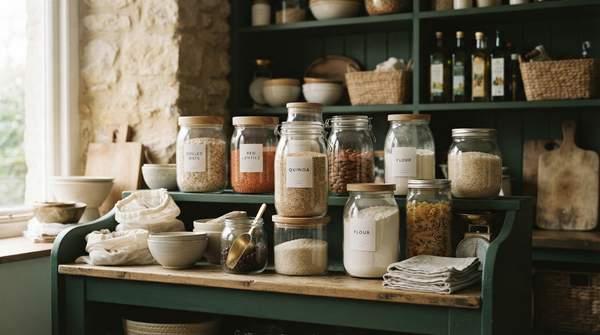
The secret to a pantry that looks as good as it functions is a phased transition: declutter what you have, decant your dry staples into clear reusable containers, and then let those containers shape how you shop. This guide covers dry goods only—not refrigerated or frozen foods—and it deliberately avoids brand recommendations, because the right storage choice depends on your food type, your containers' properties, and how quickly you use things up, not on a label.
Introduction: Why a Low-Waste Pantry Matters
Food waste is rarely a storage-capacity problem; it's a visibility problem. Zero Waste Kitchen's Lionel Lowery puts the issue plainly: food waste often happens because we don't know the food is there, and items hidden at the back of a shelf are far more likely to be forgotten and thrown away. An organized pantry is therefore one of the most practical tools for cutting household waste.
The environmental case runs alongside the aesthetic one. Writing for Homes and Gardens, Chiana Dickson describes pantry "waste" as excess food bought to make a cabinet look full, or organizer hardware—usually hard plastics—purchased without solving a real need. A low-waste pantry avoids both traps: it keeps only what you'll actually consume, stored in vessels you'll reuse for years. The result is a space that is genuinely used, not just styled.