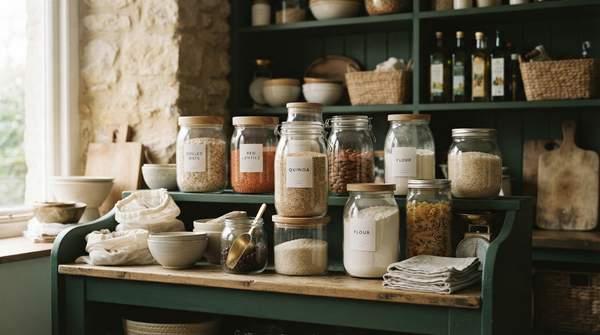
A low-waste pantry isn't a shelf of beautiful matching jars — it's a system with two moving parts that have to work together. The first is how you buy: planning purchases around what your household actually consumes, and choosing packaging that doesn't leave you with a bin full of plastic. The second is how you store: moving food out of flimsy original packaging into durable, reusable containers that keep it fresh long enough to be eaten. Sustainable living guides consistently make the same point from different angles — waste is created at the shopping list and only becomes visible at the shelf, so the fix has to start before you get home.
Understanding Your Pantry Waste: A Diagnostic Framework
Before buying a single new container, it helps to diagnose where your waste actually comes from. Earthware, an Australian sustainable-goods retailer, frames this well: your storage itself is a measuring tool. If a cereal dispenser empties quickly but a jar of specialty flour barely moves, your next shop should reflect that difference. In other words, the pantry tells you what your household realistically uses — and what it doesn't.
Waste generally shows up in two forms. Food waste happens when ingredients spoil before they're used, often because they were bought without a plan or stored in packaging that doesn't protect them. Packaging waste happens when items come wrapped in single-use plastic that has no second life. Sarah Robertson-Barnes, who writes the Sustainable in the Suburbs blog, adds a blunt note about original packaging: many plastic bags and containers are flimsy, may leach chemicals into food, and can't be recycled. The diagnostic question for each item in your pantry is simple — is this food going stale, or is its wrapper going straight to landfill? Often, it's both.
Your Low-Waste Pantry Diagnostic Framework
Use this matrix to map your own habits to the waste they produce and the change that addresses it. Read down the first column, find the habits you recognize, and take the paired action and storage strategy as your starting point. Most households find two or three rows that describe them precisely — those are your highest-impact changes.
| Waste Point / Habit | What It Produces | Low-Waste Action | Recommended Storage Strategy |
|---|---|---|---|
| Buying individually packaged snacks | Excessive packaging waste | Make homemade snacks like granola, trail mix, and cookies instead | Store them in glass or metal containers |
| Relying on original packaging for storage | Faster food degradation; flimsy bags that may leach and can't be recycled | Transfer staples out of single-use packaging after opening | Airtight glass, stainless steel, or silicone containers |
| Mindless or impulse purchasing | Overbuying; food spoiling before it's eaten | Plan meals and buy only what you need | Let your jars and dispensers show how much your household normally keeps |
| Buying rarely used ingredients in large amounts | Specialty items that barely move on the shelf | Buy occasional-use ingredients in smaller amounts, even if the packaging looks less impressive | Smaller jars sized to actual consumption |
| Defaulting to plastic bags at the store | Single-use packaging on every shop | Bring reusable bags or containers; buy grains, nuts, and spices in bulk | Paper or cloth produce bags; reusable silicone bags |
The framework works because each row connects a cause to a consequence rather than offering a generic tip. If your bin fills with snack wrappers, the answer isn't better recycling — it's a different purchase paired with a container that keeps the homemade version fresh. If flour goes stale in its paper sack, the answer is an airtight jar, not a smaller shopping trip.