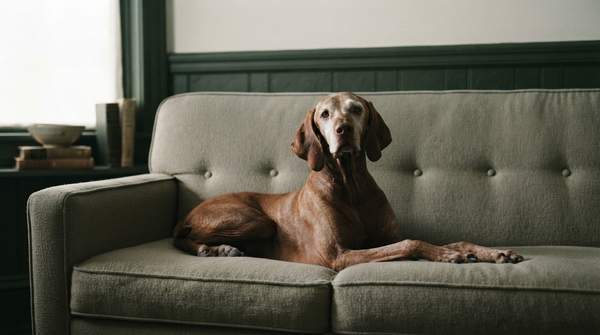
Here's the number that cuts through the marketing noise: 45,000 double rubs. When you're comparing upholstery fabrics for a home with pets, that's the minimum abrasion rating to aim for, according to furniture review guidance on pet-friendly sofa shopping. And it's a real, standardized figure — not a brand's slogan — which means you can compare any two fabrics on the same scale.
I've spent enough time in furniture stores to know how vague "durable" and "performance" can sound. So let's turn those words into data you can actually use, and then layer on the other factors that matter just as much as the rub count.
Understanding Fabric Durability: The Wyzenbeek Double Rub Test
When a fabric label cites a "double rub count," it's referring to a standardized abrasion test — the Wyzenbeek test — in which a machine rubs the fabric back and forth until it shows visible wear. Each forward-and-back cycle counts as one double rub. The higher the count, the longer the fabric resists abrasion.
How do these numbers translate to daily life? Think of it this way: every time your dog jumps on and off the sofa, or your cat kneads the armrest, that's a tiny bit of abrasion. A review of pet-friendly sofas puts the general rule bluntly: the higher the rub count, the more durable the fabric. For ordinary residential upholstery, a minimum of 15,000 double rubs is a common floor for everyday household use.
Pets change the math. Claws, dirt dragged in from outside, and constant lounging all accelerate wear beyond what a typical household sees. That's why pet owners are advised to aim for at least 45,000 double rubs — a substantial jump above the residential baseline — so you can feel at peace, as one reviewer put it, with your furry friend sharing the sofa. For demanding use or multiple pets, look even higher, in the 50,000-plus range.
The beauty of this metric is its universality. Any fabric — velvet, olefin, a blended weave — can be tested and given a number. Ask the retailer for the double rub rating of any fabric you're considering; it's the single fastest way to compare apples to apples.
Beyond Rubs: Essential Factors for Pet-Proof Upholstery
A high rub count alone won't save your sofa. A truly pet-friendly couch does four things well, according to furniture retailer guidance: resists scratches and wear from claws, repels stains and odors, keeps fur and dirt at bay, and holds its shape and style through daily use. Here's how to evaluate each.
Weave tightness. This is where claws do their damage. Tightly woven fabrics — velvet is the classic example — resist snags and scratches, because there are no loose loops for a claw to catch. A dense weave has a bonus: pet hair sits on the surface rather than weaving itself in, so it releases easily. Crypton, a performance fabric maker, cites its tighter weave specifically as the reason pet hair removal is effortless.
What to avoid. Open weaves are the trap. Chenille and tweed, for instance, have a texture that traps fur and dirt deep in the fibers, and their structure is prone to snags from claws. Fabric retailer guidance flags these as generally difficult to clean and a poor match for pet households — a beautiful tweed armchair will quietly collect fur until it looks like a second pet.
Cleanability and stain resistance. Stain-resistant and liquid-repellent fabrics are described as a must when considering a pet-friendly sofa. Some performance fabrics go further: olefin-based fabrics sold by Revolution Fabrics are bleach-cleanable without discoloring and tear-resistant, and the company recommends ordering swatches first so you can test color and texture — and I'd add, so you can test how easily hair releases from the surface.
Material type. Velvet deserves a special mention: it's soft and refined, yet its tight threads resist spills and snags, and pet hair doesn't cling easily. It's a strong fit for homes with cats or small dogs that shed. The right material, as one fabric retailer puts it, lets you create a home that's both functional and stylish — no sacrificing aesthetics for performance.
Pet-Friendly Fabric Decision Framework
Here's the structured process I'd follow when evaluating any upholstery fabric. Start with the quantitative threshold, then layer the qualitative checks on top. Each step narrows the field until you're left with fabrics that can genuinely handle a pet household.
| Step | Criterion | What to look for | Why it matters for pets |
|---|---|---|---|
| 1 | Durability (double rub count) | Minimum 45,000 double rubs; 50,000+ for multiple pets or heavy use | Resists abrasion from claws, jumping on and off, and daily lounging |
| 2 | Weave tightness (snag resistance) | Tight, dense weaves like velvet; avoid loose loops | Claws can't catch and pull threads; hair sits on top and releases easily |
| 3 | Weave red flags | Avoid open weaves such as chenille and tweed | Open weaves trap fur and dirt deep in the fibers and snag easily |
| 4 | Cleanability and stain resistance | Stain-resistant, liquid-repellent finishes; bleach-cleanable options without discoloring | Accidents happen; the fabric should clean up without permanent marks or odors |
| 5 | Material type and test | Olefin-based performance fabrics, tight-weave velvet; order swatches first | Verify texture, hair release, and color with your own hands before committing |
Work through the steps in order. A fabric that fails step one — say, a lovely 20,000-rub linen blend — is out, no matter how well it scores elsewhere. A fabric that passes step one but has an open weave fails on maintenance, per fabric retailer guidance. What survives all five steps is a fabric built for real life with animals.
One scope note: this framework applies to upholstery for furniture like sofas and chairs — not rugs or bedding — and it doesn't cover chemical analysis of stain-resistant treatments, which vary by fabric type and manufacturer.
Making Your Final Fabric Choice
So here's the decision, in one sentence: choose upholstery fabrics that meet a minimum of 45,000 Wyzenbeek double rubs, feature a tight weave, and offer proven stain and odor resistance for a pet-friendly home.
The rub count gets you in the door; the tight weave keeps claws at bay; the stain resistance handles the accidents. Skip any of the three and you'll likely be replacing or regretting the piece within a few years.
And here's how you'll know you chose well: the chosen fabric maintains its appearance and integrity after several months of pet interaction, showing minimal signs of abrasion, snagging, or permanent staining. Give your new fabric three to six months of daily life with your pets, then look closely. No pulled threads, no ground-in fur, no stubborn stains? Then the number on the label did its job — and your sofa can keep doing yours.
Sources
- Pet-Friendly Fabrics — Thesofareview
- How to Choose Pet-Friendly Furniture? — Anabei
- Furniture and Fabric for Pet Owners - Crypton
- Pet-Friendly Upholstery: Best Fabrics for Dog Owners — Fabricmill
- Pet-Friendly Upholstery Fabric — Revolution Fabrics