If you live in an apartment or a home with a small yard, the honest answer to "which compost system should I get?" is that it depends on three things: how much space you have, what scraps you produce, and how much fuss you're willing to tolerate. For most apartment dwellers, a worm bin is the workhorse choice; for anyone with a balcony or small patio, a compost tumbler adds convenience; and bokashi fermentation is a third path that works on a different principle entirely. Here's how to weigh them against each other.
Choosing Your Small-Space Composting System
The first decision is simply where the material will be processed. A beginner guide from Torus puts it plainly: start by choosing where the composting happens. A backyard bin or pile suits households with outdoor space and access to dry leaves or other carbon-rich material, while a worm bin can work indoors. If neither fits, the guide suggests using a dependable community drop-off or curbside collection service rather than keeping an unmanaged container of food scraps.
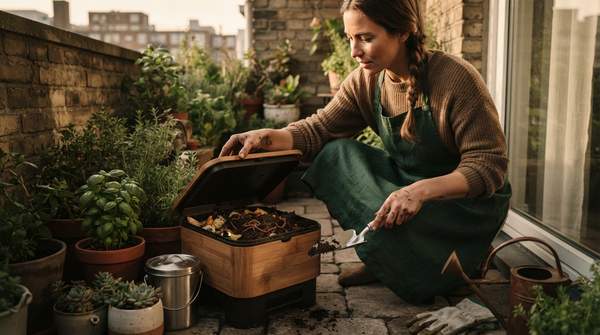
Greg Seaman's beginner guide at Eartheasy offers a matching matrix by living situation: for urban residents with no outdoor space who are composting mostly kitchen scraps, a worm bin (vermicomposting) is the recommendation; for urban dwellers with a patio or balcony, worm bins or a compost tumbler both appear, with the tumbler favored once kitchen scraps are joined by some yard waste. James Dunworth, writing at Compost Magazine after fifteen years of composting, echoes this: for an apartment with no outdoor space, choose a kitchen compost bin for collecting and a worm bin for composting—or, if budget allows, an electric composter. For a small garden, he suggests a 30–40 gallon outdoor bin, with tumblers being "great if you want convenience."