A spare room that works as both a daily home office and a comfortable guest room comes down to one big decision: your bed. Pick a Murphy bed if you need to reclaim floor space every day, a sofa bed if you want seating anyway and guests are occasional, and a daybed only if a permanent bed-shaped footprint fits your room. Get that choice right, layer in hidden storage, and the transition from weekday workspace to guest retreat takes minutes instead of an afternoon.
Choosing Your Convertible Bed: A Decision Framework
Here's the honest truth I took from comparing furniture guides: the three main options solve genuinely different problems. A Murphy bed disappears completely, freeing your floor for a desk, workout space, or play area. A sofa bed integrates seating and sleeping into one piece, so you never buy separate furniture. A daybed is the budget-friendly middle path—but it occupies the same footprint every single day.
Furniture retailers converge on a few key trade-offs. A Murphy bed supports a standard mattress, which makes it the comfort champion for regular sleeping—the team at wall bed maker Lori Beds notes it's more comfortable than a daybed for everyday use. Sofa beds, by contrast, cover basic sleeping needs with a thinner mattress, and What A Room's buyer's guide frames the choice bluntly: budget matters, since a Murphy bed requires permanent installation while a sofa bed is furniture you can simply take with you when you move.
Convertible Bed Selection Framework
Match your room to the row that fits your constraints best. Each cell reflects what furniture guides and designers consistently report about how these beds behave in real dual-purpose rooms.
| Bed type | Best daily function | Footprint | Guest frequency & comfort | Key trade-off |
|---|---|---|---|---|
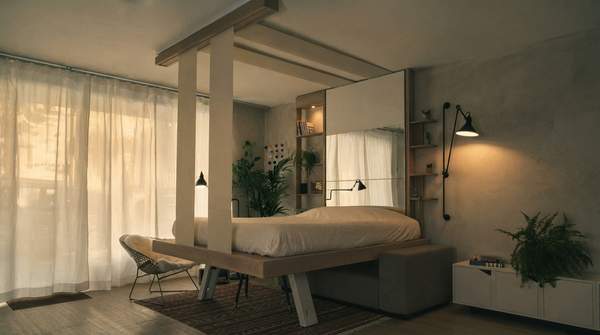
| Murphy bed | Home office or media room where the bed must disappear completely | Frees all floor space when stowed; needs clear floor and wall installation when open | Handles frequent, multi-night guests; standard mattress comfort | Permanent installation; less flexibility if you move |
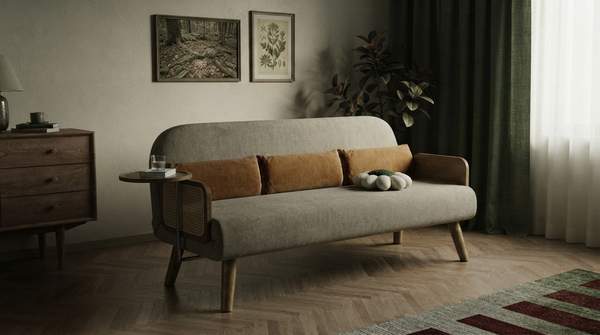
| Sofa bed / pull-out couch | Rooms where you want a real sofa anyway—lounging, reading, compact spaces | Constant sofa footprint plus extra space when pulled out | Occasional guests; thinner mattress, basic comfort | Budget-friendly and movable, but comfort is not the priority |
| Daybed | Rooms where a permanent bed-and-seating piece fits the layout | Occupies the same floor space every day | Occasional guests; short lounging, not long-term adult sleeping; trundle can add a second bed | Cheapest entry point, but no floor reclamation |
The pattern that emerges: let frequency and daily function drive the decision. If guests stay often and the room does double duty as an office, the Murphy bed wins on both comfort and space. If the room is primarily a lounging area hosting only a few nights a year, a sofa bed is the simpler, more affordable choice, as furniture writer Timothy Miller puts it for Miller Haus. If you're hosting occasionally on a budget and can live with a bed-shaped footprint, the daybed—possibly with a trundle for a second guest—makes sense.
Smart Storage Solutions for Dual-Purpose Rooms
Dual-use rooms carry more stuff than single-purpose ones, so storage has to work twice as hard. The good news: the same principles that tame a home office also hide guest clutter.
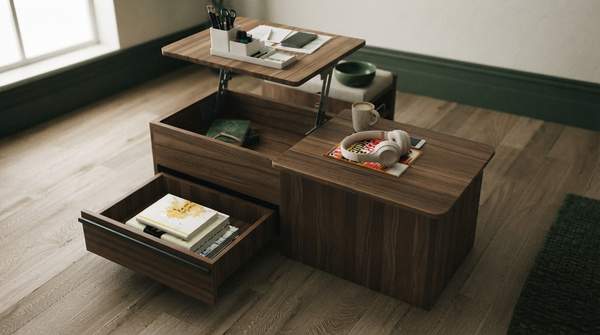
Start with furniture that stores while it serves. Bassett Furniture's design team suggests one or two storage ottomans in a spare room—they hold blankets, pillows, and miscellaneous items out of sight, then double as movable seating anywhere in the room. If you choose a Murphy bed, some models include built-in storage around the folded unit, letting you stash essentials and maximize the wall at the same time.
Then think vertically and along the walls. HGTV showed this approach in a guest bedroom where the bed folds into built-in cabinets along one wall, transforming the room into a sunny office the rest of the time—cabinetry and a work surface running the length of one wall gives the daily function a permanent home without stealing guest space. Even without custom built-ins, the principle holds: shelving and closed cabinets that go up the wall absorb the daily-function clutter so the guest-ready version of the room isn't buried under it.
Transitioning Your Room: From Daily Use to Guest-Ready
The right furniture makes the transition nearly effortless. In the HGTV example, when it's just the owners at home, the guest bed folds up into the built-in cabinets and the room becomes a bright office; when company comes, the bed comes down and the desk simply steps aside. That's the model to aim for: each function has a home, and switching means putting things where they live, not clearing the room.
Your routine can be just as simple with any bed type. With a Murphy bed, fold it down and clear the desk surface. With a sofa bed, pull out the mattress and move the ottomans to make walking room. With a daybed, you're halfway there already—dress it with proper bedding and it reads as a guest bed immediately. In every case, keep guest linens in the room itself, inside the ottomans or the wall units, so nothing needs to be carried in from a hall closet.
One warning worth keeping: when investing in a daybed or pull-out sofa for guests, don't go cheap—choose a bed you find comfortable and take advantage of a quality mattress. Your guests, and their backs, will notice the difference.
Creating Your Seamless Dual-Purpose Room
Implement your chosen convertible bed together with integrated storage, and the room can genuinely serve both masters. The decision framework above is your starting point: match your primary daily function, footprint, and guest frequency to the bed that fits, then support it with hidden storage and wall-hugging organization rather than loose furniture that has to be shuffled every visit.
Here's your measurable finish line: the room transitions smoothly between its daily use and guest-ready state within a short, manageable timeframe, with all items stored neatly. If the switch takes longer than a few minutes, or if anything ends up piled in a hallway, that's your signal to add storage or reconsider the bed type—your furniture should do the converting, not you.
Sources
- Best Sofa Beds vs Murphy Beds, Futons & Daybeds: 2025 Buyer's Guide — What A Room
- Murphy Bed vs Sofa Bed: Comfort, Cost & Space Compared — Miller Haus Furniture
- Multi-Purpose Guest Room Ideas and FAQs — Bassett Furniture
- 17 Multipurpose Guest Bedroom Ideas That Make The Most of Your Spare Space — HGTV