Here's the short answer: decluttering works best when you stop asking "what can I throw out?" and start asking three questions about every item you own. Does it serve a purpose? Does it fit the space you're creating? Does it add value to your life? Answer those in order, and the keep-or-discard decision makes itself.
That's the shift from removal to curation. And it's what turns an overwhelming weekend of garbage bags into a calm, repeatable process.
The Power of Intentional Decluttering for a Serene Home
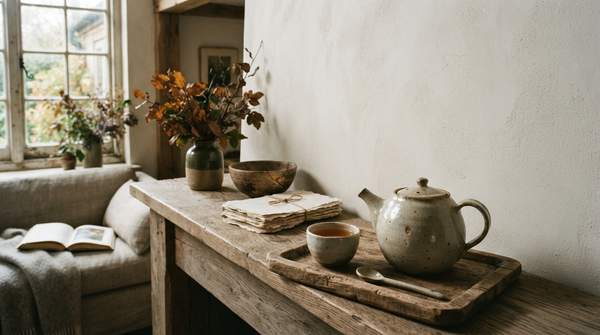
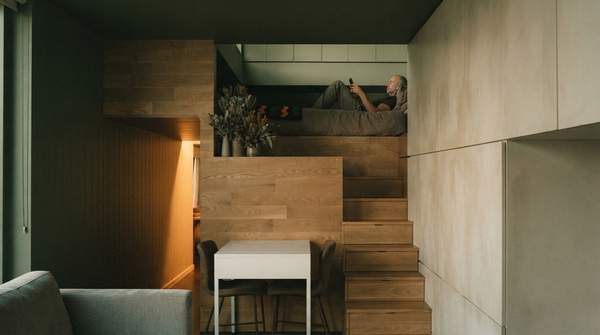
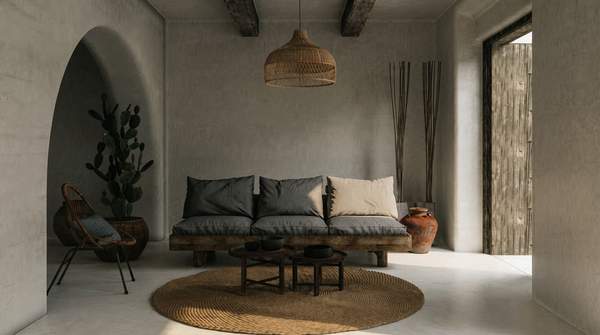
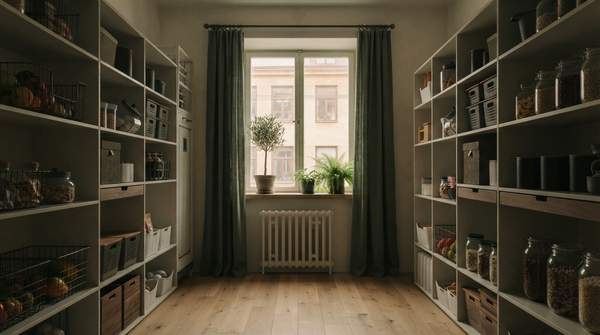
Minimalism isn't about empty rooms. It's about intention. Turkel Design, an architecture firm that builds minimalist homes, describes the philosophy as "less is more"—a mindset where every part of your home should serve a purpose or bring you joy.
That's a liberating idea. In a world that pushes us to accumulate more than we need, choosing less on purpose frees you. The payoff isn't just visual. It's practical. A home focused on essentials becomes airy and open, feels larger than its square footage, and—crucially—demands less of your attention to maintain.
So the goal of decluttering isn't a stripped-out house. It's a house where everything that remains earned its place.
Core Minimalist Principles for Thoughtful Curation
Before you touch a single drawer, get the principles straight. Minimalism asks two things of every object: function and meaning. Does it do a job? Does it reflect what matters to you?
Turkel Design puts it plainly: minimalism is about making intentional choices. Your home can absolutely have personality—but every element should reflect what truly matters to you, not what accumulated by accident.
This is why "just throw stuff away" fails. Removal without evaluation leaves you with a random remainder. Curation without principles leaves you paralyzed at every object. Principles plus a process? That's where confidence comes from.
Your Intentional Decluttering Decision Framework
Here's the tool. Take any item. Ask the questions in order. The framework synthesizes the evaluation questions that practitioners and readers of Becoming Minimalist actually use—things like "do I need it?", "why do I own it?", and "does this add value to my life, either as use-value or aesthetic-value?"
| Step | Question | If yes | If no |
|---|---|---|---|
| 1. Utility | Do I use this, or do I have a concrete plan to? | Move to Step 2 | Discard—unless it has clear sentimental value, then jump to Step 3 |
| 2. Aesthetic fit | Does this contribute to a space that's airy, open, and calm? | Move to Step 3 | Discard or relocate it out of sight |
| 3. Personal value | Does this add value to my life—through use, beauty, or joy? | Keep | Discard |
Notice the logic. An item has to pass all three tests to stay—unless it's purely sentimental, in which case personal value alone can carry it. A fourth spatula you never reach for fails Step 1. A broken lamp you keep "just in case" fails Step 1 too. A beautiful vase you love? It passes Step 3 even if it's rarely used, because aesthetic value is real value.
One Becoming Minimalist reader framed the third question exactly this way: "Does this add value to my life?" lets you evaluate an item's purpose—use-value or aesthetic-value—and if it isn't adding value, let it go. That's the whole framework in one sentence.