If you live in a small home, your walls and doors are the storage you are not using yet. The four solution types worth comparing are wall-mounted track systems, over-the-door organizers, pegboards, and tall or modular bookcases, and the right one for you depends on two questions: what do you need to store, and can you drill into your walls? Renters will usually land on over-the-door organizers or freestanding bookcases; homeowners with heavy or varied items get more out of mounted tracks and pegboards.
Introduction: Maximizing Vertical Space in Small Homes
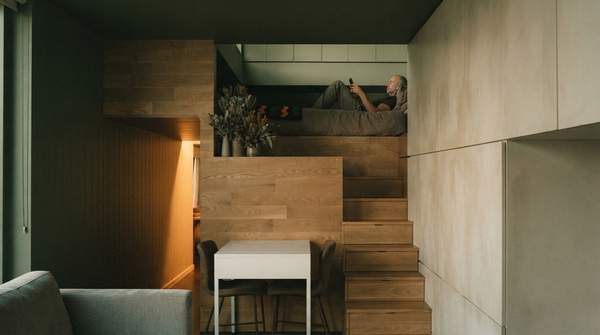
Vertical storage means moving your organization upward instead of outward, and in a small home it is often the only direction left. IKEA's own small-space guidance puts it plainly: make use of your walls when storage opportunities are few, which the company says helps create an uncluttered, stylish look. The same page shows how a loft bed frees floor space and how a pegboard can even replace a bedside table.
The payoff is real square footage. Abby Lawson, writing on her organizing blog, describes using a wall-mounted track system in her garage to take storage "almost up to the ceiling," which she says maximizes vertical space better than any other solution she has tried. That is the core trade-off this article works through: the systems that use space most completely tend to be the ones that attach to your walls most permanently.
Understanding Vertical Storage Solutions
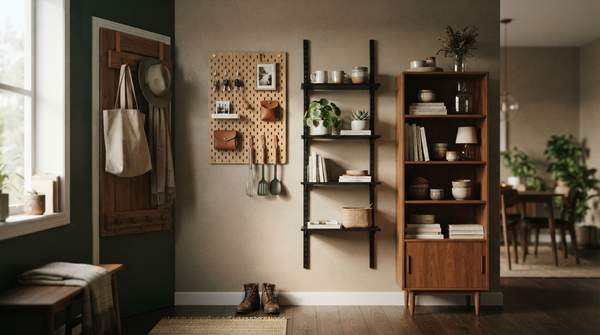
Each of the four types solves a different problem. Wall-mounted track systems, such as IKEA's BOAXEL or The Container Store's Elfa, are rails or tracks fixed to a wall, with shelves, drawers, and accessories hung from them. They are the most customizable option, and Lawson notes she has used the same system across eight different spaces in two houses, including closets and a home office.
Over-the-door organizers hang from the top of a door and need no tools at all. Wirecutter's small-space guide calls the back of a door "a hidden trove of storage space," noting that hanging shoe organizers can hold far more than shoes: craft supplies, accessories, and rolled clothing. Pegboards, like IKEA's SKÅDIS, use a perforated panel with hooks and containers, and work best for small items you want visible and within reach. Tall, narrow bookcases stand on the floor and lean on height rather than wall attachment, which Public Storage's tiny-home guide recommends for bedrooms and living areas.
Vertical Storage Solutions Comparison
The table below evaluates the four solution types against the same three criteria: what each holds best, what installation demands, and where each works in a home. Read your own situation across those columns and the shortlist usually narrows itself.
| Solution Type | Best For (Item Types) | Installation Notes | Best Suited For (Room/Location) |
|---|---|---|---|
| Wall-mounted track systems (e.g., Elfa, BOAXEL) | Highly versatile: shelves, drawers, and open zones can be reconfigured for varied items from garage gear to folded clothes | Wall-mounted tracks generally imply drilling; some modular components may be drill-free, so verify against the specific product line | Garages, closets, and offices; can run nearly to the ceiling |
| Over-the-door organizers | Small, lightweight items: shoes, craft supplies, accessories, rolled tees, pot lids, spices, cleaning supplies | No drilling; hangs over the door top, so highly renter-friendly and easy to remove | Pantries, bathrooms, kids' rooms, entryways, closets, and cabinet doors |
| Pegboards (e.g., SKÅDIS) | Tools, craft supplies, kitchen utensils, and small accessories, using compatible hooks and containers | Requires drilling into the wall for secure mounting; less ideal for renters | Work areas, kitchens, and bedside walls, especially beside loft beds |
| Tall, narrow bookcases | Books, media, games, décor, chargers, and folded clothing | Freestanding; no wall attachment required, so renter-friendly | Bedrooms and living areas where floor space is tight |
Two qualifications matter when reading this table. First, the "install without drilling" claim attached to modular systems like Elfa or ClosetMaid comes from Melynda Kloc's SelfStorage.com guide, which says these systems let you add or remove shelves and switch between drawers and open space without drilling; other evidence, including Lawson's account of mounting Elfa in a home office, treats these as wall-mounted systems. Treat drilling as typical for the track itself and check the specific product line before assuming otherwise. Second, over-the-door organizers work best with items that do not add significant bulk or weight, since heavy loads can strain hinges.
Renter-Friendly Vertical Storage Options
If you cannot drill, your two strongest options are over-the-door organizers and freestanding tall bookcases. Over-the-door organizers are the most tool-free choice in this comparison: Wirecutter highlights a structured mesh shoe organizer that avoids the droopy look of cheaper versions, plus a cabinet-door lid rack that holds six pot lids, and an over-the-cabinet-door basket for awkward items like foil rolls and small cutting boards. All of these mount by hanging, not fastening.
Doors themselves are often-ignored vertical space, as Public Storage's room-by-room guide notes, recommending over-door hooks for bedrooms and cabinet-door hooks for kitchens. Tall, narrow bookcases are the other renter-safe route: they stand on the floor, need no wall attachment, and Public Storage lists them for both bedrooms and living areas. Kloc's guide makes the same distinction from the other direction, noting that ready-made systems and hanging organizers suit renters or people whose needs keep changing, while custom installs use every inch but cost more and require installation.
Renter-Friendly Options at a Glance
- Over-the-door shoe organizer: holds shoes, craft supplies, accessories, and rolled clothing; installs by hanging, no tools.
- Cabinet-door racks and baskets: Wirecutter points to a lid rack for pot lids and a door basket for foil rolls, cutting boards, and cleaning supplies.
- Tall, narrow bookcase: freestanding height for books, media, and folded items in a bedroom or living area.
- Modular components, verified drill-free: some shelf-and-drawer modules may avoid wall drilling, but confirm per product line before relying on it.
Choosing the Right Solution for Your Home
Match the solution to the item first, then to your walls. For clothes, linens, and bags, Public Storage suggests vertical shelf dividers to create structured zones that reduce toppling, and Kloc notes modular systems let you switch between drawers and open space as your wardrobe changes. For kitchen utensils and spices, the same guide recommends wall rails, magnetic strips, and cabinet-door hooks; for office supplies and cables, a pegboard or wall-mounted desk in a work area.
Weight and visibility come next. Pegboards and track systems hold their loads on the wall itself, which is why they suit heavier or frequently rearranged items, but that security is what makes them poor fits for renters. Over-the-door organizers trade capacity for convenience, and Public Storage's closing advice applies across all four types: keep open storage for items you use or want to see, and hide chargers, paper clutter, and cleaning products behind doors or in drawers, so storage supports the room rather than taking over every wall.
Make Your Choice: Vertical Storage for a Clutter-Free Home
Choose a vertical storage solution based on your specific item types, installation capabilities (renter versus homeowner), and the room's available vertical space. In practice: renters storing lightweight items should start with an over-the-door organizer on the most crowded door in the home; renters storing books and media should choose a tall, narrow bookcase; homeowners who want maximum capacity should look at a wall-mounted track system run toward the ceiling; and anyone with small tools, crafts, or utensils they want visible should consider a pegboard.
The measurable indicator of a good choice is reduced visible clutter and improved organization in previously underutilized vertical areas of your home. If, a week after installing, the back of a door, an empty wall, or the space above a shelf is doing organized work it was not doing before, the right solution is in place.
Sources
- Vertical storage for an uncluttered small bedroom — IKEA
- Tiny Home Storage Ideas: How to Use Vertical Space Without Adding Clutter — Public Storage
- 20+ Vertical Storage Solutions to Organize Your Whole House — Abby Organizes
- 23 Excellent Organizers for Small Spaces — Wirecutter: Reviews for the Real World
- Vertical Storage Ideas: Small Space Organization Hacks for Any Home — SelfStorage.com Moving Blog